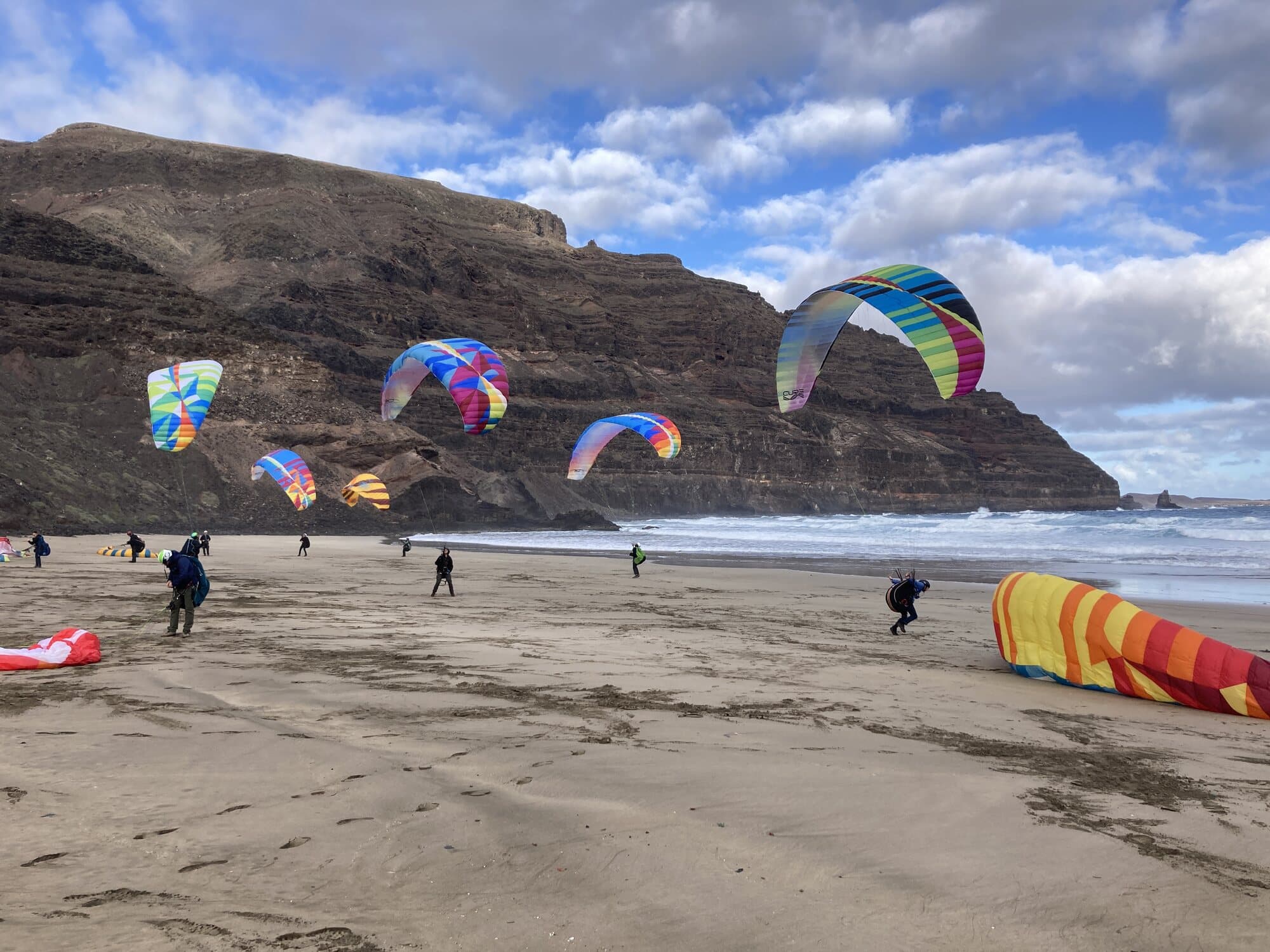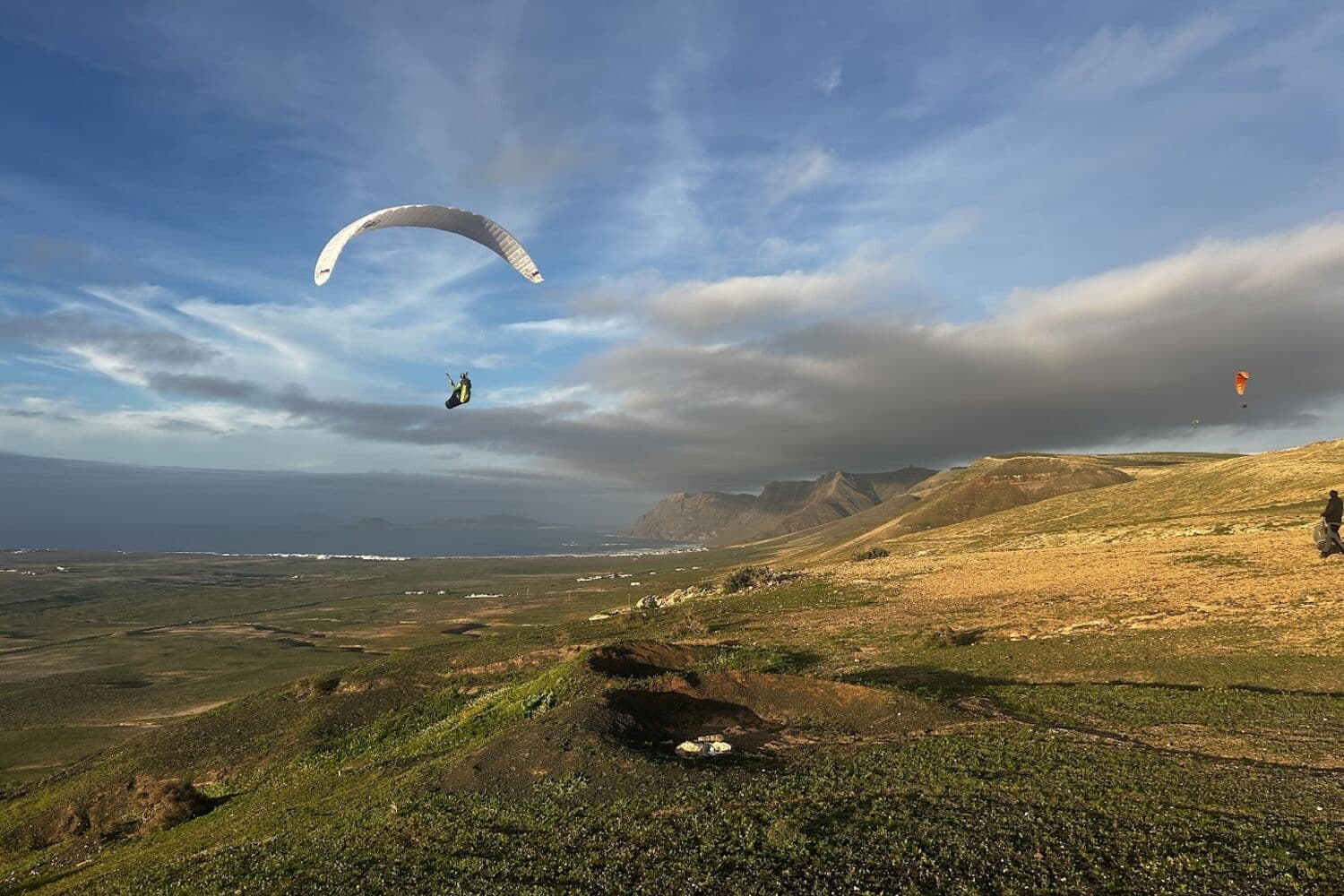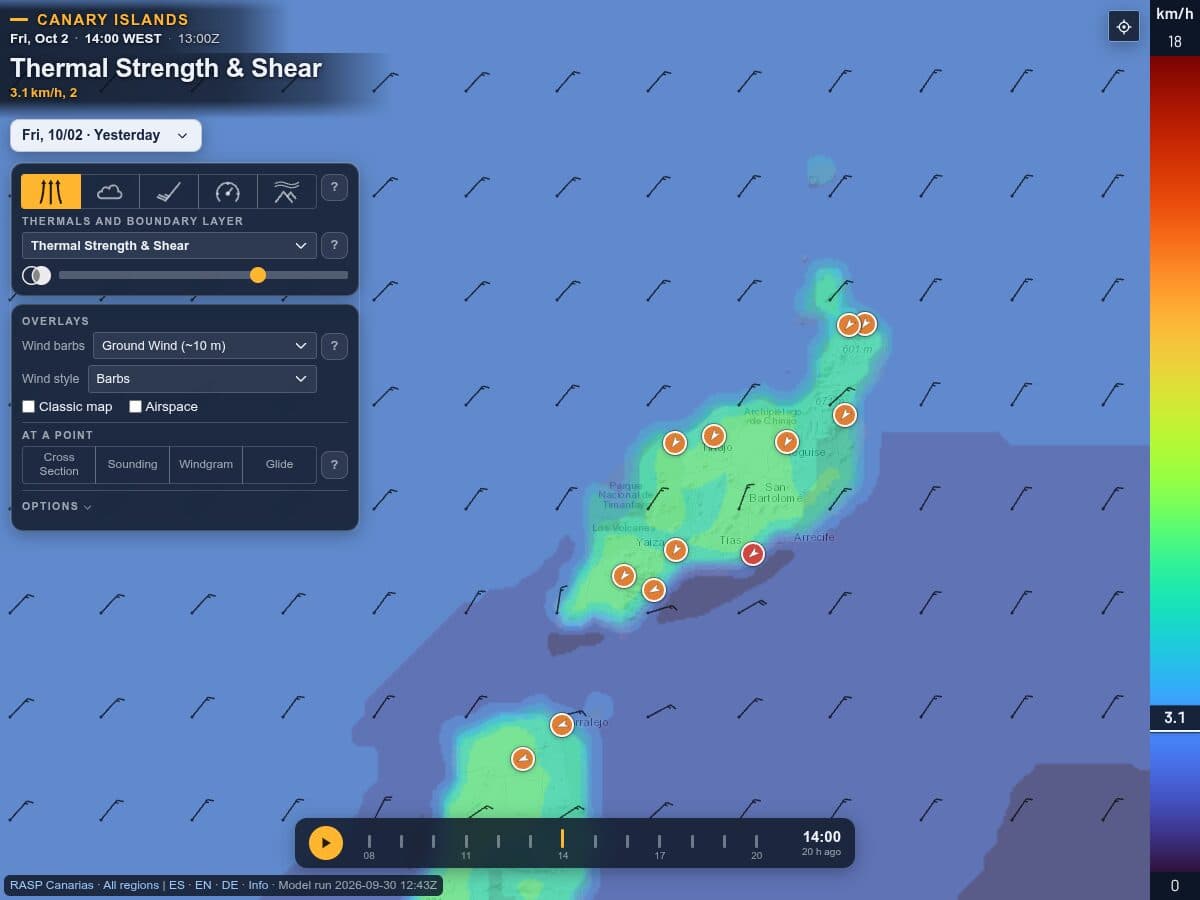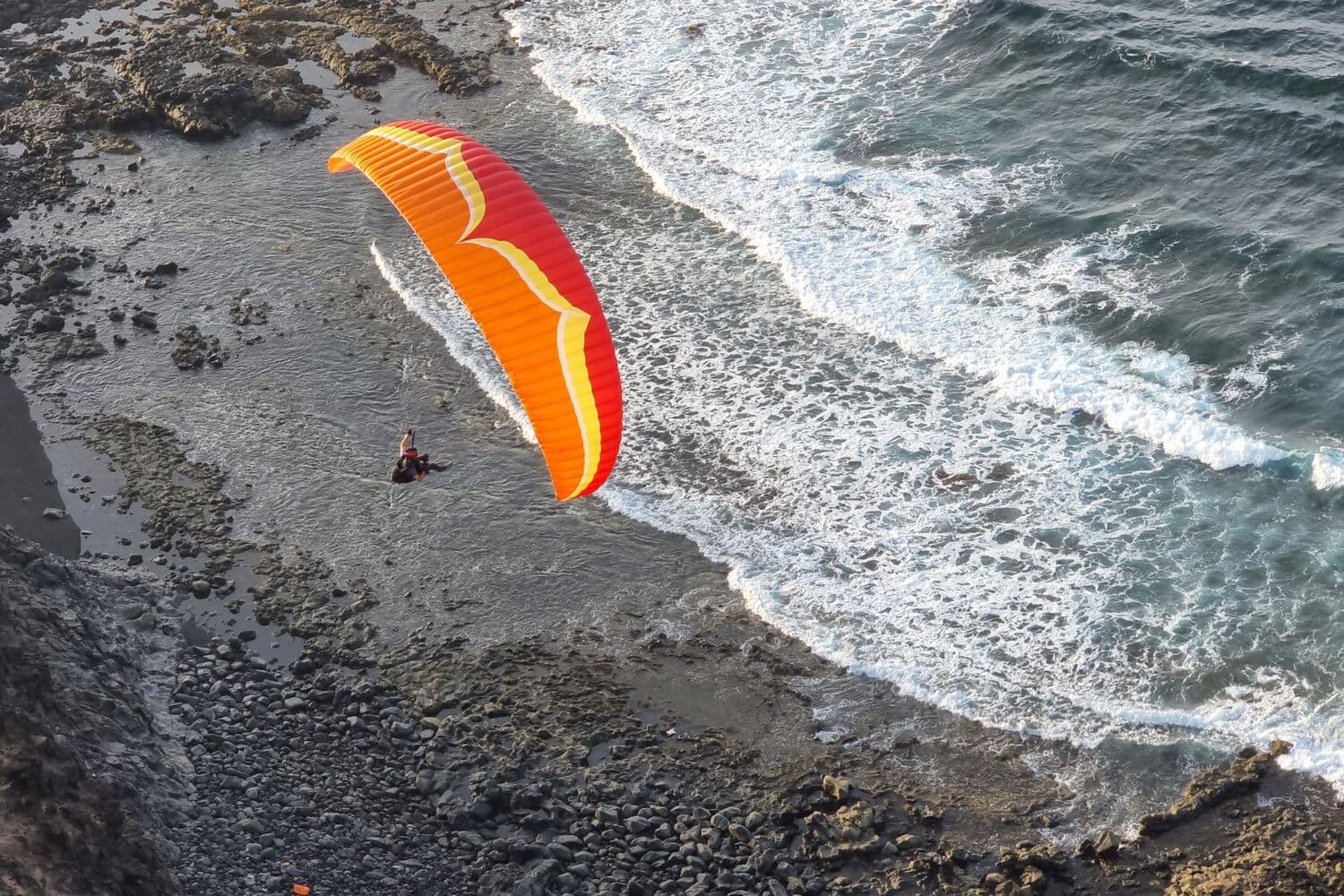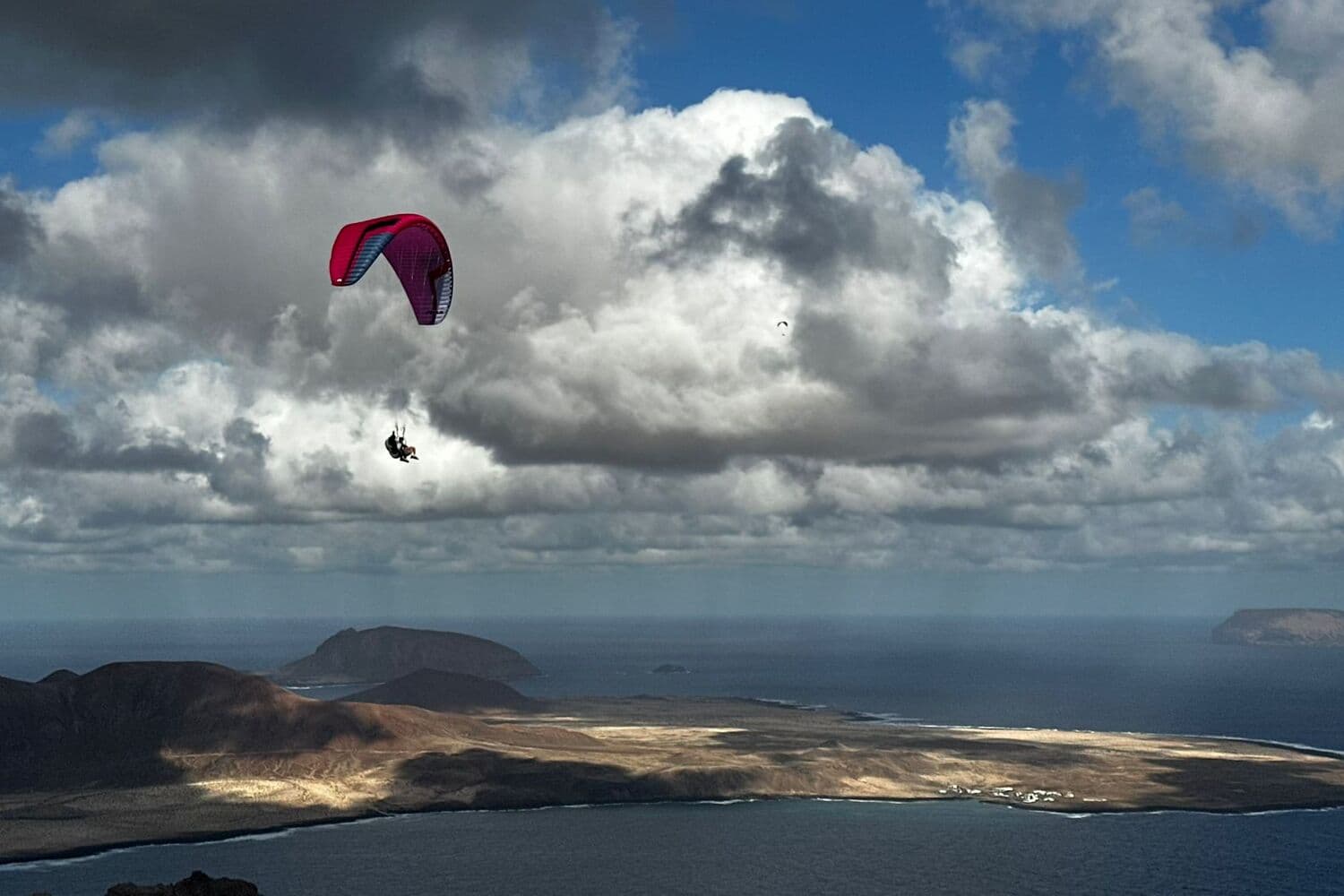
Lanzarote is a trade-wind island. For most of the year a north-easterly blows across it, and most of its sites are coastal ridges that turn that wind into soaring lift. What changes through the year is how strong and how steady the trades are, and how often something else breaks in: a north-westerly behind a winter front, a southerly, or a calm. Each of those wakes up a different set of sites, so there is no single "season" here. There is a season for each part of the island.
The pattern in one paragraph
Summer is the trade-wind season: across the Canaries the north-east trades blow on about 70% of days in July against 45% in January (AEMET-sourced summary), and July is the windiest month at Arrecife. That is good for the sites built for a strong north to north-east wind, and often too much for the lighter ones. From October to March the trades come and go. Fronts from the north-west, southerlies and light days give the rest of the island its turn, and the long Famara cliff gets many of its best days.
Month by month
Average wind is the monthly mean over Arrecife from WeatherSpark (NASA's MERRA-2 model, so read it as the shape of the year, not a station reading). Rain days are days with at least 1 mm at the airport, from AEMET's 1981–2010 normals. The sites are the ones whose wind window, in our site data, matches what the month usually brings.
| Month | Average wind | Rain days | What usually works |
|---|---|---|---|
| January | 22 km/h | 3 | Mixed. Famara on north-west days, Mala on north-east and east days, Macher thermals in light south-easterlies |
| February | 23 km/h | 3 | As January. Órzola closes on 15 February |
| March | 23 km/h | 2 | Trades building; Mala's season ends |
| April | 24 km/h | 1 | Mostly trades: Tenesar, El Cuchillo, Playa Quemada |
| May | 24 km/h | 0.4 | Trades |
| June | 25 km/h | 0 | Trades, steadier and stronger |
| July | 28 km/h | 0 | Windiest month. Strong-wind sites |
| August | 26 km/h | 0.1 | As July, with Órzola open again |
| September | 21 km/h | 0.4 | Trades easing |
| October | 20 km/h | 2 | Calmest month. Mala's season starts; more light days |
| November | 21 km/h | 3 | Mixed, like winter |
| December | 22 km/h | 4 | Mixed. Wettest month, still only a few days of rain |
Summer: June to September
The trades are at their steadiest and strongest, and the island's wine growers will tell you the same: the wind is "most concentrated and fastest during the summer months" (D.O. Lanzarote). This is the time for the sites that need a proper north or north-east wind:
- Tenesar, a low coastal ridge over the lava fields in the north-west, flies in 16 to 30 km/h from north-west to north-north-east. The guide calls it "most suitable for summer, when wind is stronger".
- El Cuchillo, a takeoff facing a crater near Tinajo, for moderate northerlies (10 to 21 km/h).
- Órzola at the northern tip, for north-easterlies along the cliffs towards Punta Fariones, once it reopens after the nesting closure.
- Playa Quemada on the south coast, when the wind backs east.
The catch is that a strong summer trade is often too strong for the lighter takeoffs on the Famara cliff, and the middle of the day can be more than you want anywhere. Mornings and evenings are calmer.
Winter: November to March
The trades are less reliable in winter. North-west polar air behind fronts, deep lows to the south-west and calm spells all take turns (source). For a pilot that variety is the point:
- North-west days are Famara days: Los Pechos, Chimida and Las Nieves, with the run along the cliff to the Mirador del Río. See Paragliding at Famara.
- Mala works in north-east to east winds and the guide gives its best season as October to March.
- Macher is for thermal flights in light south to south-east wind, "specially in winter time".
- The rare south and south-west days belong to Papagayo and Maciot/Femés. Watch them closely: the same lows can bring very strong, gusty south-westerlies.
Winter here is mild (average highs of 21 to 22 °C from December to February) and rain falls on three or four days a month. Expect calima, the Saharan dust that hazes the sky: it is most frequent from December to February (Dorta et al., 2005). It cuts visibility and can kill the thermals.
Spring and autumn
April and May are already mostly trade-wind months. October is the calmest month of the year on average, which makes it a good time for light-wind sites and a poor one for the strong-wind ridges. Both seasons are short transitions; plan as for the season they lead into.
The Órzola closure
Órzola is closed from 15 February to July for the bird nesting season, as the guide notes. The whole Famara cliff is also a protected area for birds. If you plan a spring trip around the north, plan without Órzola.
So when should you come?
- For reliable soaring in the trades on the coastal ridges: June to September.
- For the most variety, including Famara on its best days, Mala and Macher: October to March, with a few spare days in the plan.
- For anything in between: any month has flyable days, but none guarantees a given site.
Whatever the month, the forecast decides the day. Reading the forecast before you drive out explains how we pick a site, and the wind app shows today's.