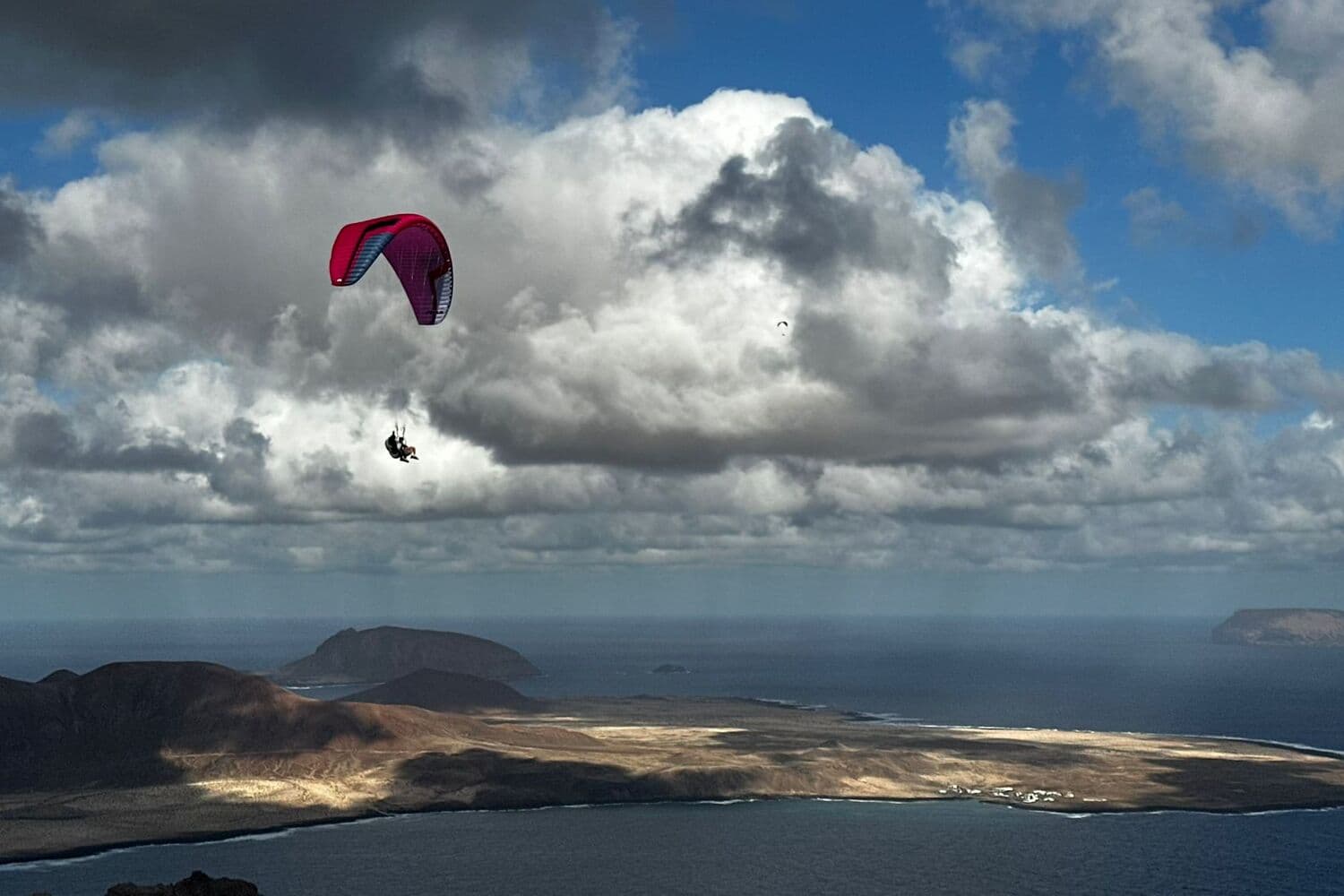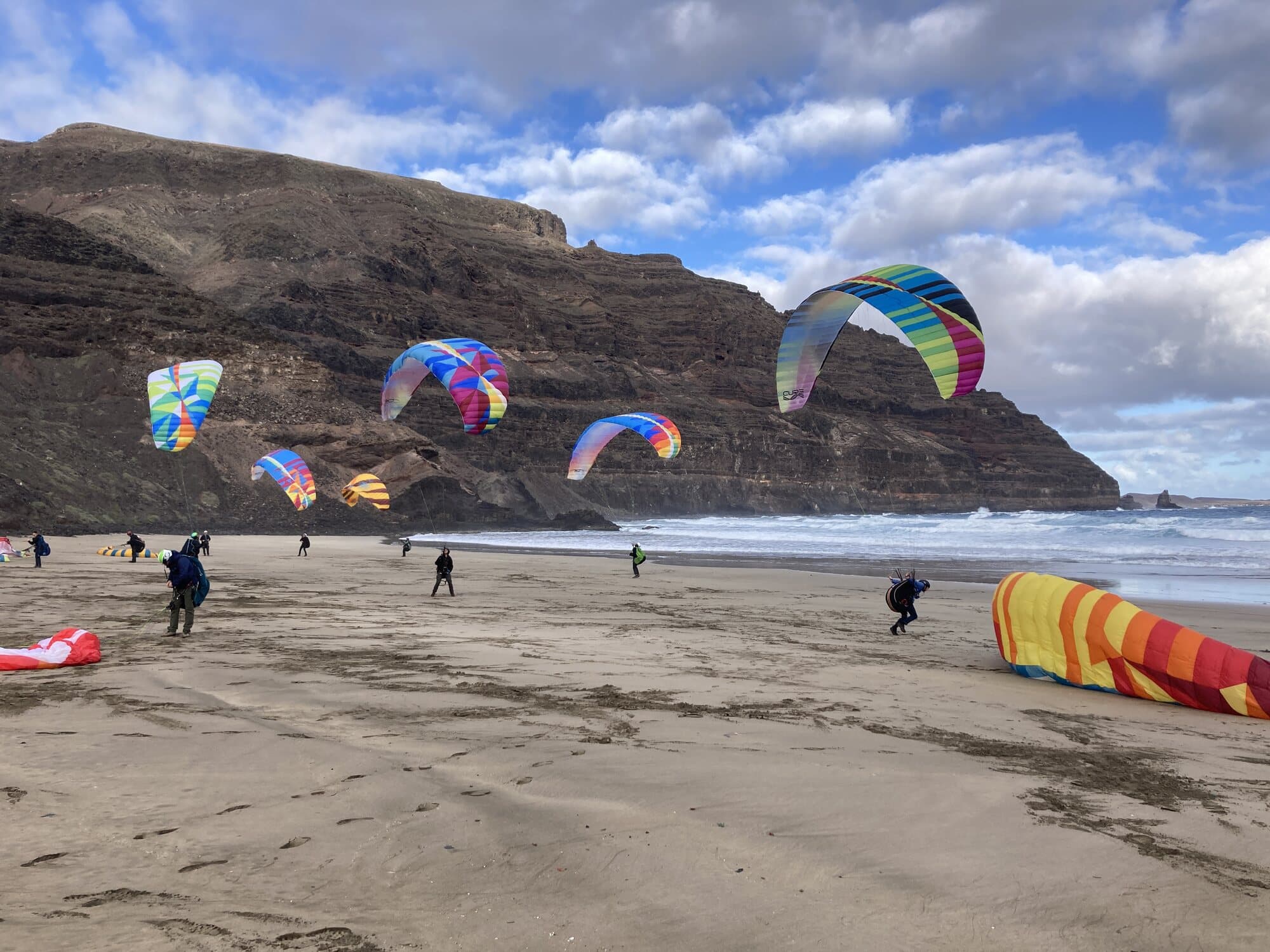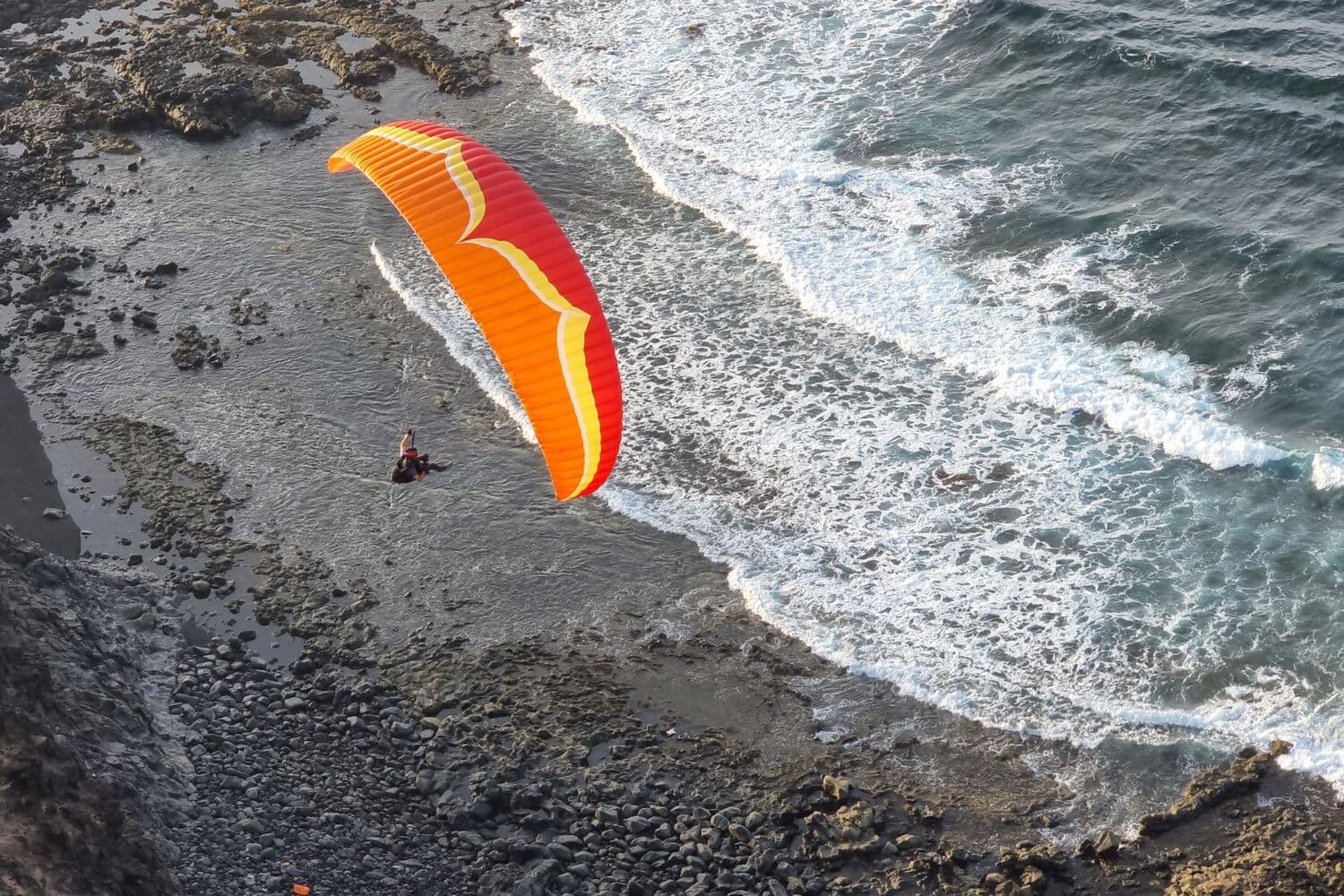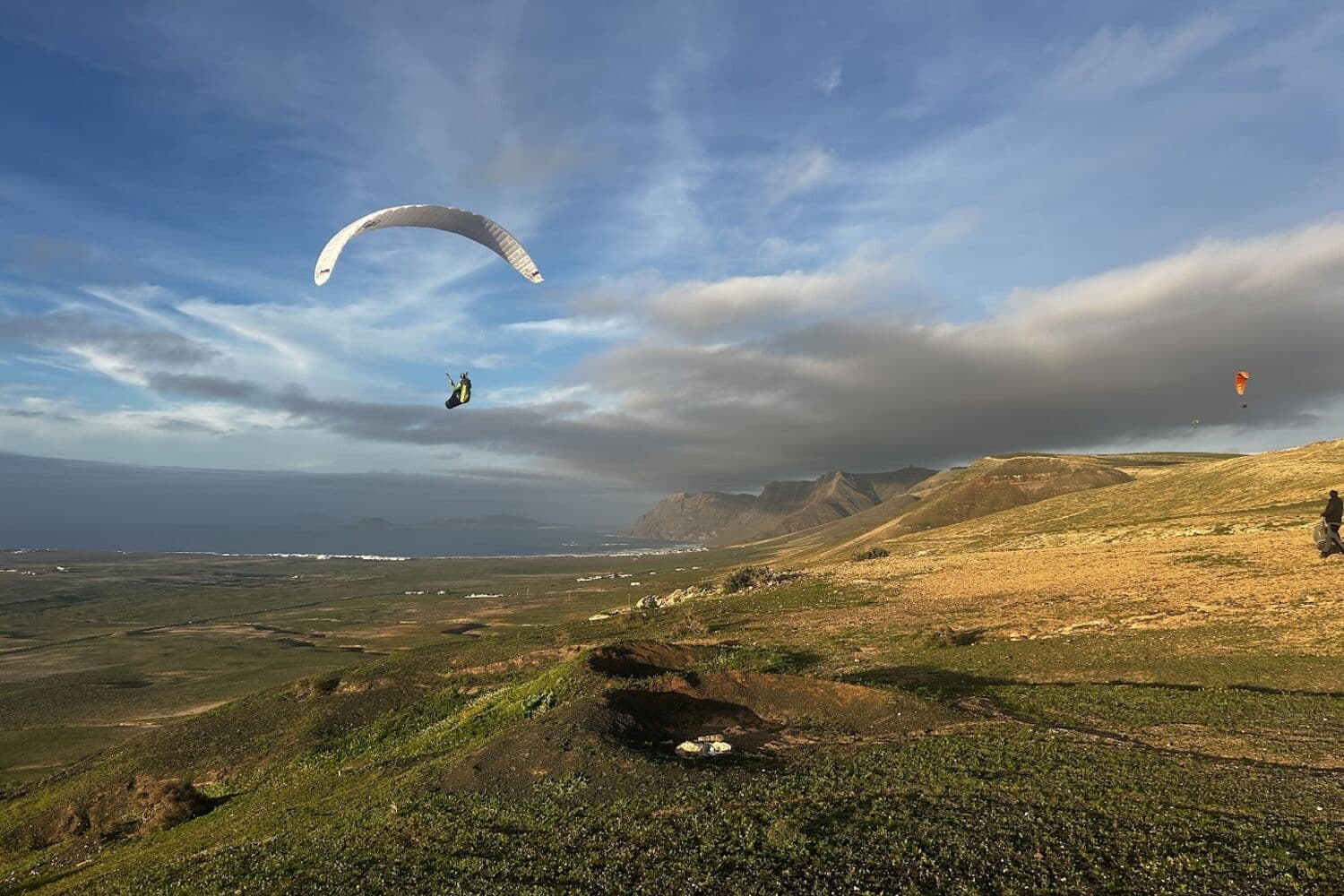
The Risco de Famara is the flight most pilots come to Lanzarote for: a wall of cliff about 15 km long that rises to 671 m at Peñas del Chache, the highest point on the island (Wikipedia), with the Atlantic, the beach at Caleta de Famara and the island of La Graciosa below. On a good day you take off above Teguise and soar the whole cliff to the Mirador del Río.
Which wind
Famara faces north-west, and it flies in winds from west round to north. It does not work in the usual north-easterly trade, which blows along it rather than into it. That makes it, more often than not, a winter site: the north-west days come with the weather systems of October to March (see When to paraglide in Lanzarote).
Direction matters along with strength. From our site data, north-west is the best direction at every takeoff on the cliff. West and due north both work, but less well.
Three takeoffs, three wind strengths
The cliff has three main takeoffs, and each suits a different strength of wind:
| Takeoff | Where | Wind it suits |
|---|---|---|
| Los Pechos | the hills above Teguise, the main takeoff | 11 to 24 km/h |
| Chimida / Cerro Terroso | on the cliff, north-east of Los Pechos | 8 to 17 km/h |
| Las Nieves | the top of the cliff, by the Ermita de las Nieves | 5 to 12 km/h |
So the first decision of the day is the wind speed. A fresh north-westerly means Los Pechos. When it is too weak to take off at Los Pechos, the guide's advice is Chimida. And on light days the top of the cliff at Las Nieves is the one that works.
Los Pechos is the main gateway to the cliff. You park at Pechos Altos, beside the takeoff. Its gentle slopes, several launch heights and big landing areas make it the island's training hill too: good for ground handling, reverse launches and short soaring flights. The guide recommends mornings and evenings for the smoothest air.
Chimida is for the light-wind days, often with some instability, when Los Pechos is too weak. The guide gives its access as easy, generally by car.
Las Nieves is behind the Ermita de la Virgen de las Nieves, a short walk from the road, at the top of the cliff. It is for light north to north-west wind, and the guide rates it a beginner site in the right conditions.
The flight
From Los Pechos the classic run goes north-east along the cliff: over Chimida, Cerro Terroso and Famara, all the way to the Mirador del Río, and on the best days almost to Órzola. You are soaring a single long ridge with the sea on your left going out. It is mostly ridge soaring: stay in the band of lift in front of the cliff.
Where to land
The usual landing is Famara beach, below the cliff at Caleta de Famara. Top landing at Los Pechos is easy in the right wind, and there are open areas below it too. The beach is a long way below the takeoffs by road, so plan your retrieve before you launch.
The trap: the lee behind the Famara shoulder
The one hazard every local pilot will warn you about is the lee below the Famara shoulder. In north to north-west wind it is dangerous to cross it low. Make sure you are high above the terrain, or come forward and cross out in front of the cliff, where the air is clean (guide).
The other things to know:
- Airspace. On the published chart, the Famara takeoffs fall inside Lanzarote's controlled airspace (CTR, surface to 3,500 ft). Ask locally how it is handled before you fly; see Flying Lanzarote with your own wing.
- Birds. The whole cliff is a protected area for birds. Keep to the soaring line and off the cliff face.
Before you go
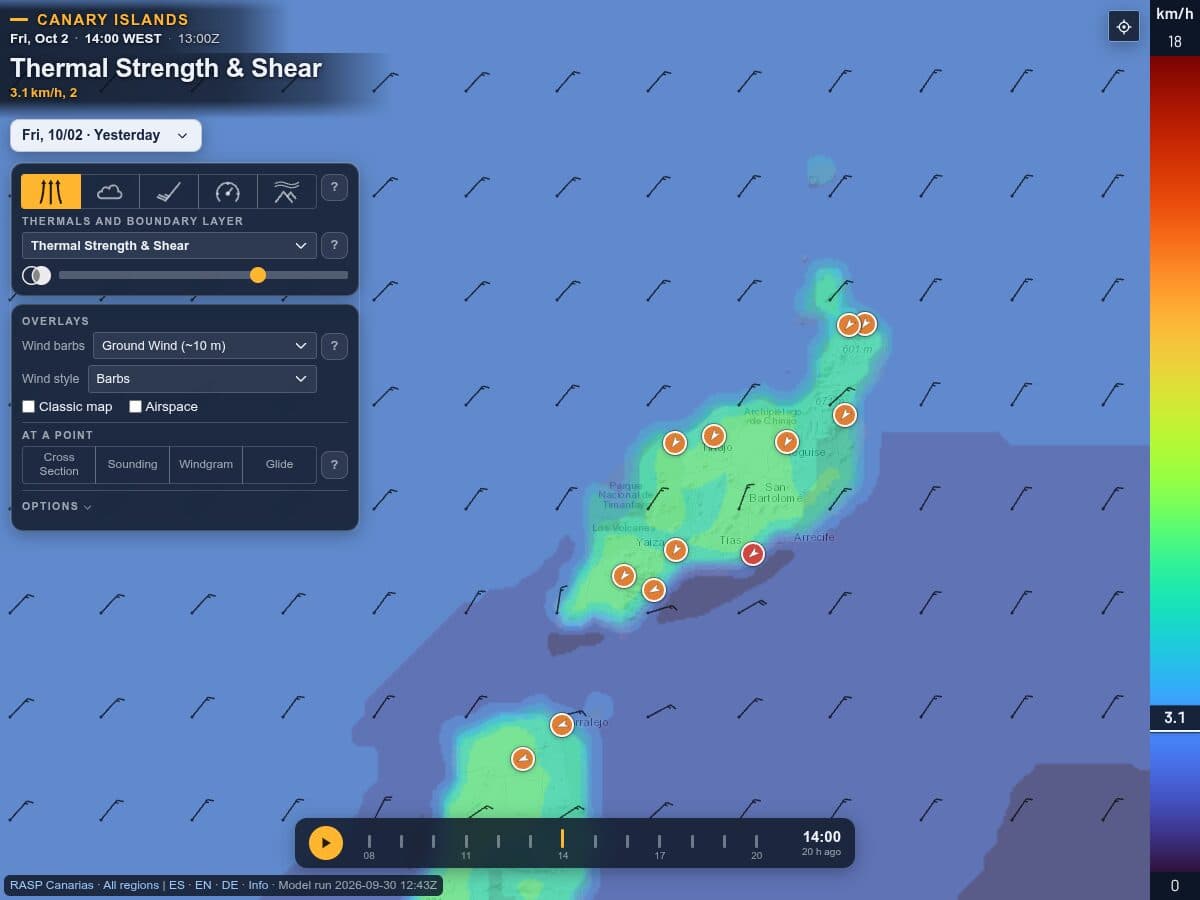
Check the direction first, then the speed, then pick the takeoff from the table above. The wind app shows the live stations and the forecast for each takeoff, and Reading the forecast before you drive out explains how we read them together.