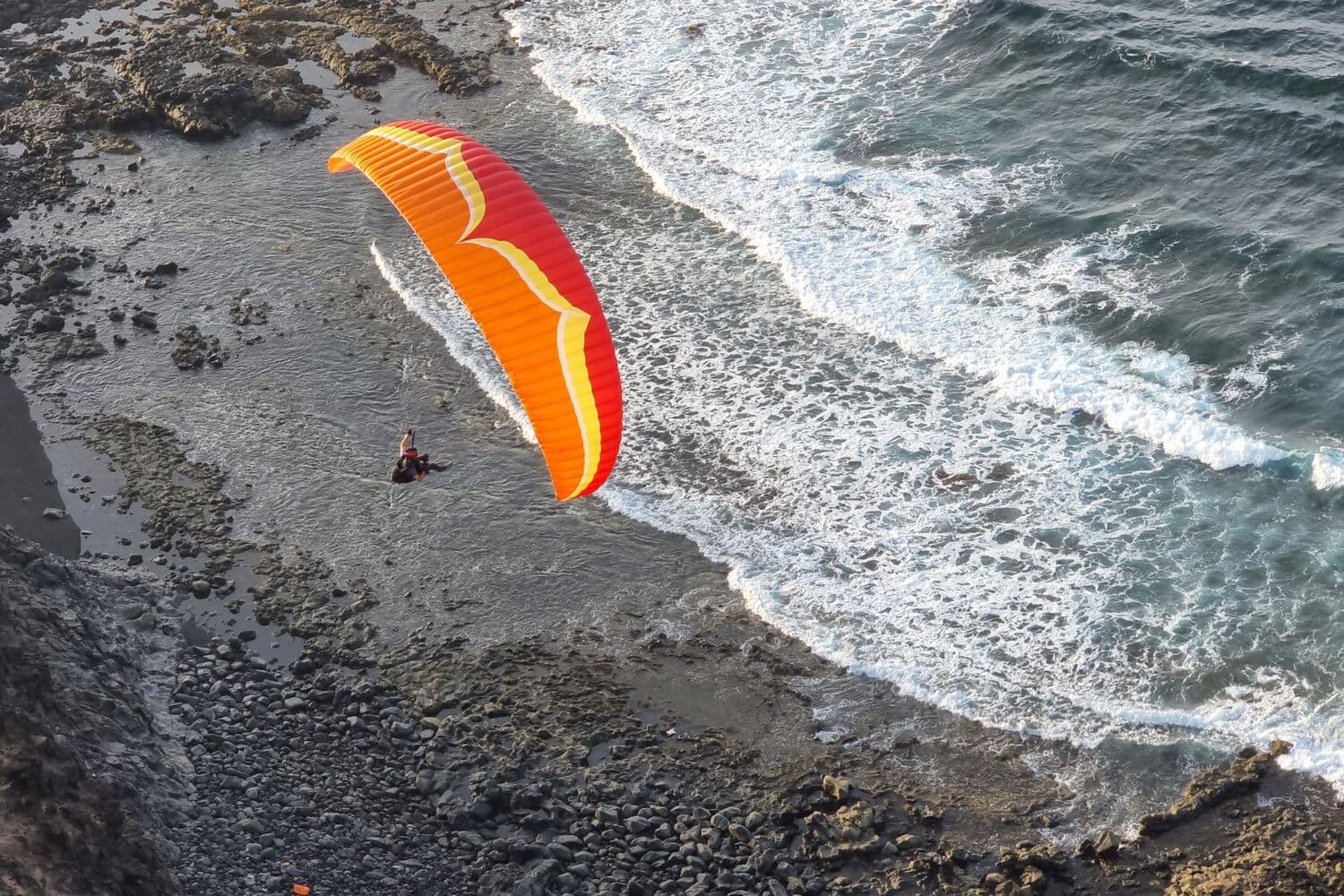
Every Canary island has paragliding, and it is not the same flying on each. If you are deciding where to take a flying holiday, the real question is what kind of flying you want: soaring the coast in the trade winds, thermalling from high mountain takeoffs, or a mix. Here is how the islands compare, from sources we trust.
The short version
| Island | Known for | Highest takeoffs | Best for |
|---|---|---|---|
| Lanzarote | Coastal soaring in the trades, the Famara cliff | under 700 m, on the Famara cliff | Soaring, ridge practice, many sites in a small area |
| Tenerife | Big mountain flights, sites sheltered from the trades | about 2,200 m at Izaña | Long glides and altitude, flying in the lee of the trades |
| La Palma | Thermal flying on the west side, competitions | over 2,000 m | Thermals, cross-country |
| Gran Canaria | Small coastal sites near Las Palmas | 175 m at Los Giles | Short soaring flights, training |
| Fuerteventura | Coastal cliffs in the trades | (no source we trust) | Soaring in strong trades |
Lanzarote
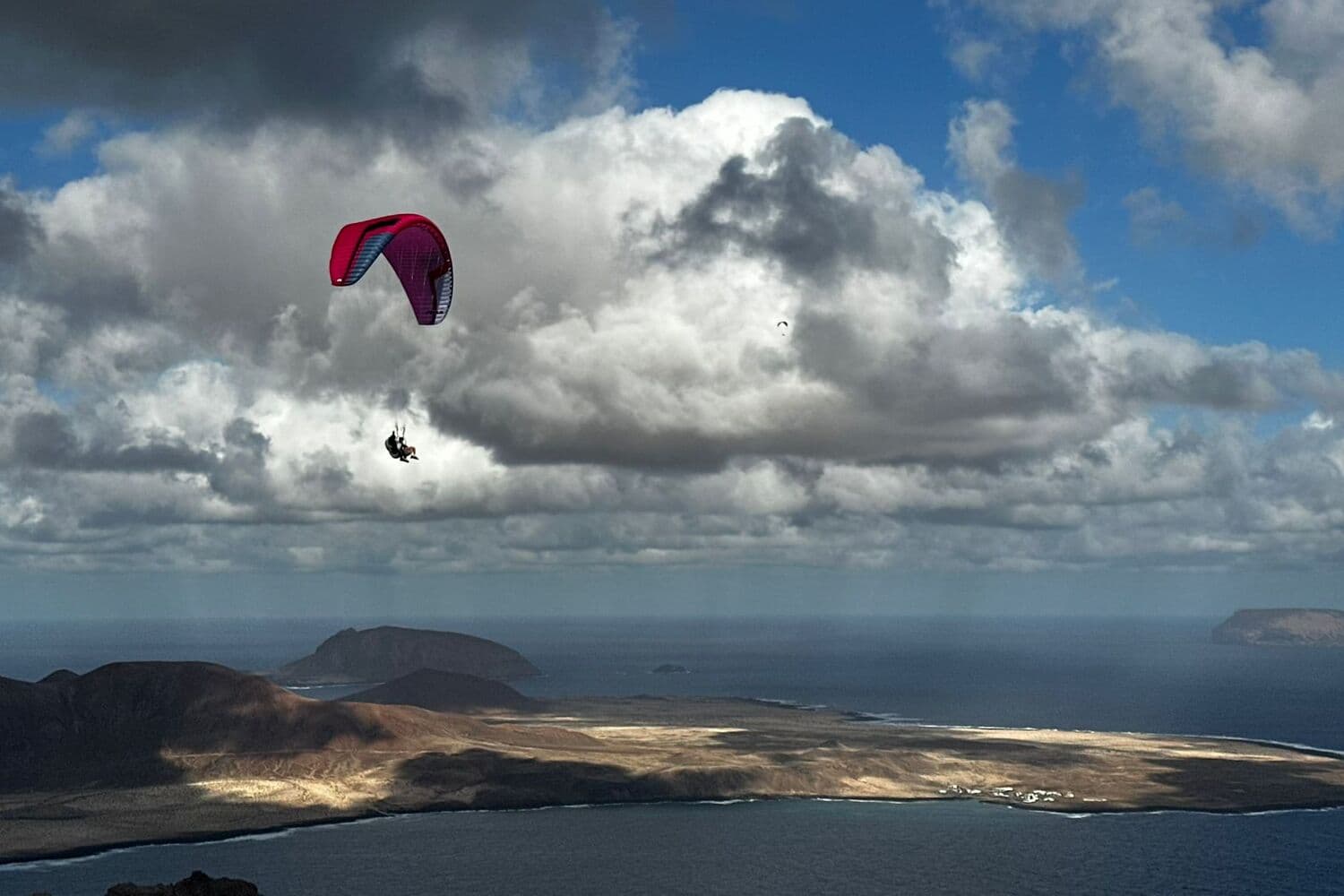
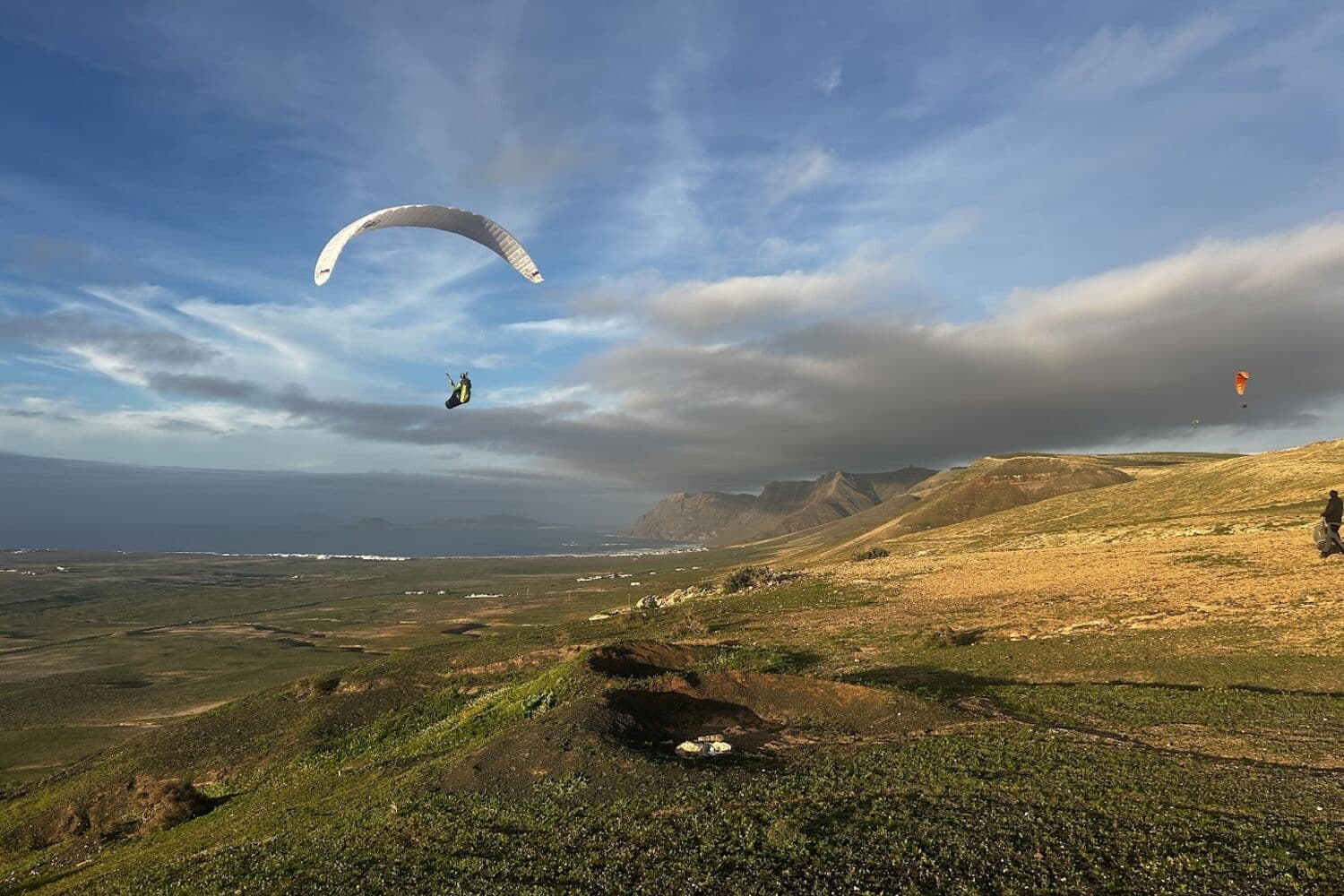
Lanzarote is low and open to the trade winds, and its flying is mostly coastal soaring: long ridges turned into the wind, the sea below, and a site for almost every direction. The Famara cliff, about 15 km long and up to 671 m high, is the centrepiece and one of the classic soaring flights in the Canaries (Hello Canary Islands). Around it are twelve sites on an island about 60 km long.
What Lanzarote does not have is high mountains. Thermal days happen, at inland sites such as Macher, but the island is not a thermal or cross-country destination in the way La Palma and Tenerife are. XC Mag's travel guide makes the same point: many visitors "head to nearby Tenerife instead, which allows flying in sites protected from the strong NE trade winds" (XC Mag).
Come to Lanzarote for airtime in the trades, for building ridge-soaring skills, and for a small island where you can usually find a site that works.
Tenerife
Tenerife's flying is about height. Izaña, in the Teide National Park, takes off at about 2,200 m in light to moderate north to north-east wind and glides about 45 minutes down to Puerto de la Cruz: "the highest glide in the country" (Hello Canary Islands). On the sheltered south-west side, Taucho above Adeje (about 760 m) flies in west or south wind (Web Tenerife), and Ifonche sits at around 1,000 m.
The tourist board says the island is flyable all year, with October to May best for experienced pilots (Web Tenerife). Note the seasonal rule at Taucho: landing on La Caleta beach is allowed in winter only.
La Palma
La Palma is the thermal island. Its west side is "the best-known area for flying, where international competitions are also held", often in the lee of the trades with thermals "often lasting the whole day" (La Palma pilot information, 2022). Takeoffs run from around 800 m to over 2,000 m, among them Torre del Time at 1,100 m with landing at Tazacorte beach. Flying over the Caldera de Taburiente is prohibited.
Puerto Naos was closed after the 2021 eruption and its airspace reopened in July 2024 (La Palma 24). The best season is October to April.
Gran Canaria
Gran Canaria's best-known sites are small and coastal. Los Giles, near Las Palmas, is the most popular (takeoff at 175 m), and Las Coloradas is a 60 m training hill with smooth wind; together they serve as the island's training areas (Hello Canary Islands). Gran Canaria is also the island with published paragliding agreements in its airspace (ENR 5.5).
Fuerteventura
Fuerteventura, Lanzarote's neighbour, shares its trade winds and has plenty of coastal cliffs to soar. We have not found a source on its individual sites that we would stand behind, so ask locally.
Things that are the same everywhere
- The 300 m rule of thumb. Outside the airports' controlled zones, the base of the Canary Islands TMA is 1,000 ft above the ground (ENR 2.1), so expect a ceiling of around 300 m above the terrain unless a local agreement says otherwise.
- Paperwork. Licence, IPPI card and third-party insurance valid in Spain, on every island. See Flying Lanzarote with your own wing.
- Ferries and flights. The islands are linked by inter-island flights and ferries, and Lanzarote, Fuerteventura and La Graciosa are a short ferry ride apart, so a trip that combines two islands is easy to arrange.
Which one?
- To soar a lot, in a small area, most days: Lanzarote.
- For long glides from high takeoffs: Tenerife.
- For thermals and cross-country: La Palma.
- For a short trip with a few easy coastal flights: Gran Canaria.
And if you can, combine them: a week of soaring on Lanzarote and a few days of thermals on La Palma or Tenerife make a very good trip.